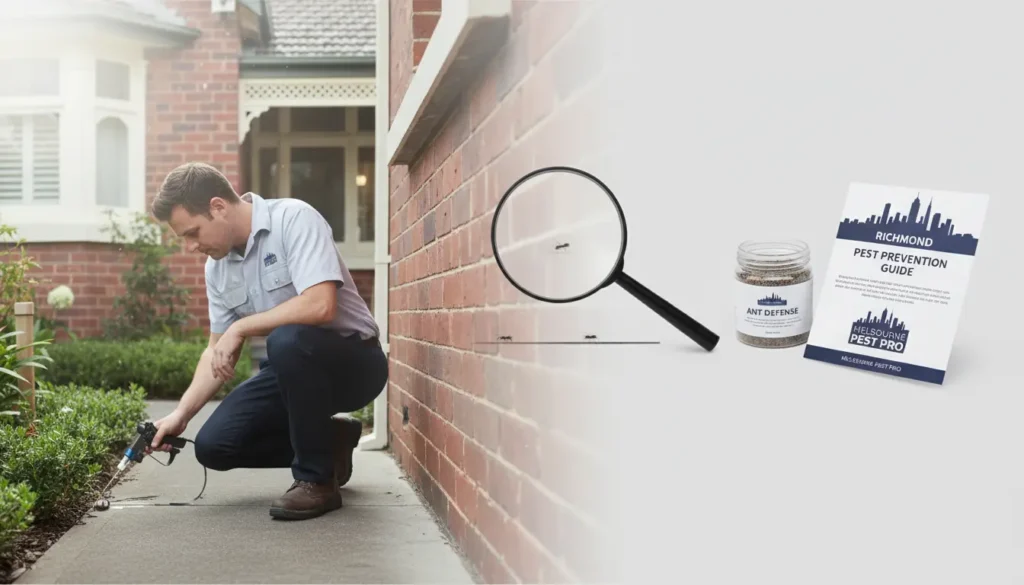
Ants can turn a peaceful Richmond property into a frustrating battleground overnight. These tiny invaders often enter through the smallest cracks, drawn by food scraps, moisture, or even the warmth of your home. In Melbourne’s variable climate, with its humid summers and occasional heavy rains, ant problems spike, especially in densely packed suburbs like Richmond. Homeowners and business owners alike report seeing trails of ants in kitchens, gardens, and even office spaces. At Melbourne Pest Pro, we’ve handled countless cases across Melbourne, including in Richmond, where older terrace houses and modern apartments provide ideal entry points for pests. This guide will equip you with practical knowledge to stop ants before they become a full-blown infestation. You’ll learn about their habits, prevention strategies, and when to call in the experts, ensuring your property stays protected without the hassle of constant clean-ups.
Understanding Ant Infestations in Richmond Properties
Ants are resilient creatures, thriving in Melbourne’s temperate environment. In Richmond, where urban development meets green spaces along the Yarra River, certain ant species like Argentine ants and coastal brown ants are particularly common. These pests form large colonies, often numbering in the thousands, and forage for food sources within a 50-metre radius of their nest. The ‘what’ of an ant infestation starts with scouting ants seeking sweets, proteins, or water. Once they find a viable spot—like your pantry or outdoor bin—they lay down pheromone trails, inviting the entire colony to feast.
Why does this matter in Richmond properties? The suburb’s mix of Victorian-era homes with unsealed gaps and contemporary builds with landscaped gardens creates vulnerabilities. Melbourne’s wet winters can flood nests, forcing ants indoors, while dry spells drive them towards reliable water sources like leaking pipes. Without prevention, a minor sighting can escalate, leading to structural damage from nesting in walls or costly food contamination.
To break it down:
- Colony Structure: Queen ants lay eggs, workers forage and maintain the nest. Disrupting trails early prevents colony growth.
- Entry Points: Cracks in foundations, gaps around doors, and unsealed vents are prime targets in Richmond’s older properties.
- Attractants: Spilled food, pet bowls, and overgrown vegetation signal an open invitation.
- Seasonal Patterns: Peak activity hits in spring and summer, aligning with Melbourne’s warmer months when foraging intensifies.
- Health Risks: Ants carry bacteria on their bodies, potentially spreading contaminants in kitchens or food prep areas.
In our experience at Melbourne Pest Pro, we’ve seen that properties in inner-city areas like Richmond suffer more from ant issues due to shared green spaces and high foot traffic. Early identification of trails can reduce the need for chemical interventions by up to 70%, saving time and money. Understanding these basics empowers you to act proactively, keeping your home or business ant-free without relying solely on reactive treatments.
Actionable Tips for Preventing Ant Infestations in Richmond
Preventing ant infestations requires a multi-layered approach tailored to Richmond’s urban-suburban blend. Melbourne’s weather plays a big role—sudden downpours can wash away natural barriers, while heatwaves push ants towards shaded, cool interiors. Local regulations, like those under Victoria’s pest management guidelines, emphasise eco-friendly methods, especially near the Yarra, to protect waterways. Housing types in Richmond, from heritage terraces to high-rise units, demand specific strategies: seal gaps in brickwork for older homes or manage balcony planters in apartments.
Start with a thorough inspection. Check perimeter areas weekly, focusing on sunny spots where ants bask. For indoor prevention:
- Seal Entryways: Use silicone caulk on cracks around windows and doors. In Richmond’s drafty older homes, this can block 80% of intrusions.
- Maintain Cleanliness: Wipe surfaces with vinegar solutions to erase pheromone trails. Store food in airtight containers and empty bins promptly—crucial in humid Melbourne conditions.
- Outdoor Management: Trim vegetation touching your house and create a 30cm gravel barrier around foundations. This deters ants from bridging to your property.
- Moisture Control: Fix leaks immediately; ants love damp areas. In rainy seasons, ensure gutters direct water away from walls.
- Natural Repellents: Sprinkle diatomaceous earth or cinnamon around entry points. These are safe for pets and align with Australian environmental standards.
Considering local factors, Richmond’s proximity to parks means ants from communal gardens can migrate. If you manage a business, integrate pest prevention into routine maintenance, especially for cafes or shops handling food.
Pro Tip: An insider secret from our team—apply a thin line of petroleum jelly around pot plants or tree bases. It creates a sticky moat ants can’t cross, perfect for Richmond’s garden-loving residents without harming the environment.
For those in nearby suburbs, similar tactics apply; for instance, properties in Fitzroy North face comparable challenges due to shared ecology. If DIY feels overwhelming, consider a professional indoor pest inspection to identify hidden risks early.
Common Mistakes to Avoid When Preventing Ant Infestations
Homeowners in Richmond often underestimate ant threats, leading to repeated issues. A frequent error is using over-the-counter sprays indiscriminately. These kill visible ants but ignore the colony, causing survivors to scatter and multiply. Financially, this means ongoing purchases of ineffective products, potentially costing hundreds annually, plus risks of chemical residues in living spaces.
Another pitfall: ignoring outdoor sources. Many focus indoors while ants nest in mulch or under pavers, untouched. In Melbourne’s clay soils, this allows colonies to thrive, eventually breaching your home. Safety-wise, neglected nests near electricals can lead to short circuits if ants chew wiring—a hidden fire hazard in older Richmond properties.
Don’t rely on myths, like planting mint as a cure-all. While it repels somewhat, it won’t stop determined colonies and can attract other pests. Businesses make the mistake of skimping on commercial pest management, opting for one-off treatments that fail under Victoria’s hygiene laws, risking fines or closures.
Overwatering gardens during dry spells creates moist havens for ants, exacerbating problems in water-conscious Melbourne. The risks? Structural weakening from nesting and health concerns from bacteria transfer. By avoiding these, you prevent escalation—saving on repairs and ensuring compliance with local standards. For expert guidance, explore how we serve areas like St Kilda East, where similar oversights are common.
In summary, preventing ant infestations in Richmond properties boils down to vigilance, sealing vulnerabilities, and smart maintenance. By understanding ant behaviour, applying practical tips, and steering clear of common errors, you can protect your home or business effectively. Melbourne’s climate demands consistent effort, but the payoff is a pest-free environment.
If you’d rather leave it to professionals, Melbourne Pest Pro offers tailored solutions backed by years of local experience. Our team specialises in safe, efficient treatments that align with Australian best practices. Visit our about us page to learn more about our commitment to Richmond and beyond. Need help with preventing ant infestations in Richmond properties in Melbourne? Call Melbourne Pest Pro today at 0399707667.
Leave a Reply